Introduction
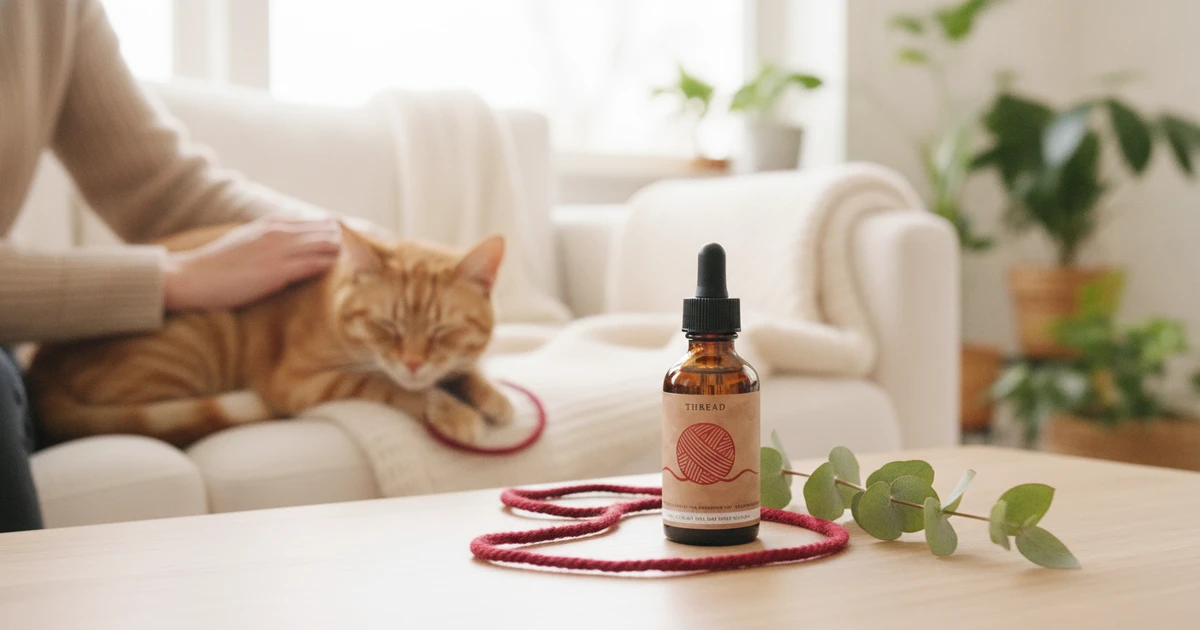
A cat tail injury can leave pet parents searching for gentle, trustworthy support. Hemp oil for cat tail injury is often explored as part of a broader hemp wellness routine, especially when a cat seems sore, stressed, or less mobile after a bump, sprain, or sudden mishap. At Thread, this care philosophy is tied to the Red Thread, the invisible, unbreakable bond of health and love that connects a pet and their parent. That bond is why quality matters so much: if you would not use it for yourself, why give it to your cat?
Primary Benefit / Feature
Why full spectrum hemp tincture matters more than basic hemp oil
Not all hemp oil is created equal. For cat parents, the first thing to understand is product type. Hemp isolate contains only one cannabinoid, usually CBD, with no terpenes or other cannabinoids. Distillate preserves more of the plant’s profile, and full spectrum hemp extract keeps the complete cannabinoid and terpene profile naturally found in hemp. That matters because the entourage effect suggests these compounds work better together than alone.
For a cat tail injury, many pet parents want a hemp tincture that supports calm and general comfort without relying on artificial flavoring. Botanical terpenes such as β-Caryophyllene, Limonene, Myrcene, and α-Bisabolol are biologically active compounds, not just taste enhancers. They are chosen for function, not gimmicks. Most terpene research is based on human or rodent studies, and effects in pets may vary, especially in cats, so sensitivities should always be considered.
A high-quality 30 mL full spectrum hemp tincture may contain around 5,000 mg of hemp extract and still pass contaminant screening for pesticides, heavy metals, solvents, and microbes. That level of transparency is a strong buying signal.
Choose botanical terpenes and full spectrum hemp extract over artificial flavoring whenever possible; quality should be visible in the formula, not hidden behind sweetness.
Application / Lifestyle Impact
Supporting a cat’s comfort routine with trust and consistency
A tail injury can affect more than movement. Cats may hide, become tense, or resist being handled. That is why hemp oil for cat tail injury is often discussed as part of a calm, routine-based wellness approach rather than a quick fix. Pet parents usually look for products that fit into daily life: easy to measure, easy to verify on a COA, and made with the same purity they would expect for themselves.
Human-grade manufacturing is a major trust factor here. It means the product is made to standards suitable for human consumption, which is rare in the pet hemp space. For a pet parent, that is not just a label; it is a promise that the same standard of care is being applied to both ends of the Red Thread.
FDA-certified manufacturing is another essential benchmark. An FDA-certified lab uses pharmaceutical-style controls, not just a final third-party test. That matters because pet parents should not have to guess what is in the bottle. A lab-tested hemp tincture with verified cannabinoid content and zero detectable contaminants gives families more confidence when choosing hemp wellness for cats.
- Full spectrum hemp extract, not isolate
- Human-grade standards
- FDA-certified manufacturing
- Botanical terpenes instead of artificial flavoring
- A recent COA with potency and safety results
- Clear cannabinoid and terpene transparency
Science and Evidence
What university research reveals about hemp wellness for pets
The most responsible hemp oil for cat tail injury guidance comes from science, not anecdote. Thread’s formula philosophy was built by studying the results of two major university studies on hemp wellness for pets and identifying what those formulas seemed to be missing. That kind of research-informed development is different from claiming the product itself was tested in a trial. It was not.
In veterinary research, hemp products have been studied most often in dogs, and the findings suggest hemp may interact with pathways involved in comfort, stress response, and general wellness. While cats are not dogs, the same cautious, quality-first logic still applies: use a verified full spectrum hemp tincture, start with guidance from your veterinarian, and watch for individual response.
The science also supports why terpenes deserve attention. β-Caryophyllene is known for CB2 receptor activity in broader cannabinoid research, while Limonene, Myrcene, and α-Bisabolol are often associated with mood, relaxation, and soothing properties in preclinical literature. Again, these findings are not universal pet guarantees, but they do help explain why botanical terpenes are more meaningful than artificial flavoring.
A premium hemp oil for cat tail injury should therefore be judged by what it contains, how it is made, and what its COA proves: potency, purity, and transparency.

Leave a Reply